How Smart Homes Work
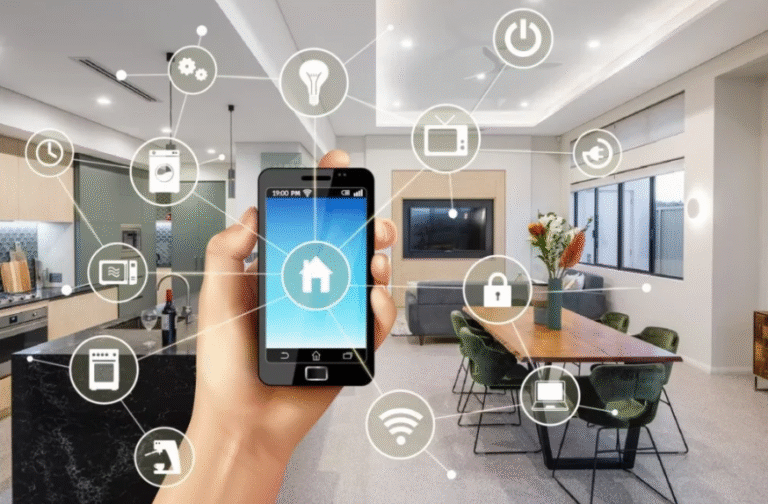
A smart home functions as an integrated system of devices, hubs, and connectivity. Sensors gather environment and state data, which is processed locally or in the cloud to form automation rules. Hubs coordinate control across protocols, while connectivity enables device communication. The design emphasizes modularity, privacy-by-design, and reliability, with secure authentication and verifiable access. Failures and latency are accounted for with predictable behavior, but the system’s limits and trade-offs invite closer inspection.
What a Smart Home Is and Why It Works
A smart home is a networked system that integrates sensors, devices, and software to automate and remotely control household functions.
It coordinates data streams, automation rules, and feedback loops to optimize comfort, energy use, and safety.
Privacy tradeoffs arise from data collection, while user consent governs data sharing and feature enablement, shaping autonomy, security, and trust in everyday operations.
The Core Layers: Devices, Hubs, and Connectivity
The core architecture of a smart home rests on three interrelated layers: devices, hubs, and connectivity. Devices generate inputs and outputs, hubs coordinate control, and connectivity enables communication across protocols. Latency tradeoffs arise from processing and transmission delays, while interoperability standards enable cross-vendor integration. Design emphasizes modularity, reliability, and predictable performance, supporting user autonomy without vendor lock-in or excessive complexity.
See also: How Smart Devices Are Changing Daily Life
How Data Flows: Sensing, Processing, and Acting
Sensing, processing, and acting constitute the data flow that enables smart-home functionality: sensors collect environmental and device state data, centralized or edge processors interpret that data, and actuators execute appropriate control signals.
Sensing latency and acting latency are influenced by data aggregation, network throughput, and processing bottlenecks, while timely security updates mitigate privacy concerns and preserve system integrity without compromising responsiveness or user autonomy.
Designing for Security, Privacy, and Reliability
The design emphasizes privacy by design and fail safe authentication, ensuring verifiable access without overreach.
Components, networks, and devices integrate minimal data exchange, robust auditing, and failover capabilities to sustain trusted operation under adverse conditions.
Frequently Asked Questions
How Do Smart Homes Handle Power Outages and Outages of Internet?
Smart homes maintain operation via Smart grid awareness and backup power, prioritizing offline devices and local control during outages; critical systems stay bus-powered, while nonessential devices pause. Internet loss triggers autonomous routines, preserving security and user-defined uptime targets.
Can Older Devices Be Integrated Into a Modern Smart Home System?
Older devices can be integrated through retrofit compatibility, using bridges and standard protocols; maintenance strategies focus on firmware updates and device health. Privacy considerations and data sharing remain critical, ensuring secure configuration, auditable access, and minimized data exposure for freedom-loving users.
What Are the Costs Beyond Initial Setup for Ongoing Use?
Five dollars saved per month on energy isn’t the point; the point is ongoing maintenance costs. The system requires cost estimates for subscriptions, data privacy measures, and security updates to sustain reliability and operational freedom for users.
How Does a Smart Home Protect Against Firmware Vulnerabilities?
The smart home protects against firmware vulnerabilities through continuous firmware hardening and robust threat monitoring, delivering anomaly detection, secure boot, signed updates, rollback capabilities, and rapid incident response while preserving user autonomy and privacy.
Do Smart Devices Collect or Share Data With Third Parties?
Devices collect and share data with third parties under certain conditions; they transmit telemetry, usage, and diagnostics, while privacy trade offs and data governance shape what is exposed and monetized, emphasizing control, transparency, and user autonomy.
Conclusion
In sum, a smart home orchestrates devices, hubs, and connectivity to sense, process, and act with minimal human input. Data flows from sensors to local or cloud processing, triggering automated responses while preserving privacy and resilience through secure authentication and modular design. Reliability is achieved via fail-safes and predictable performance across latency variations. The system remains autonomous yet auditable, like a turbine’s geartrain in a medieval clocktower—anachronistically precise, technically elegant, and relentlessly efficient.